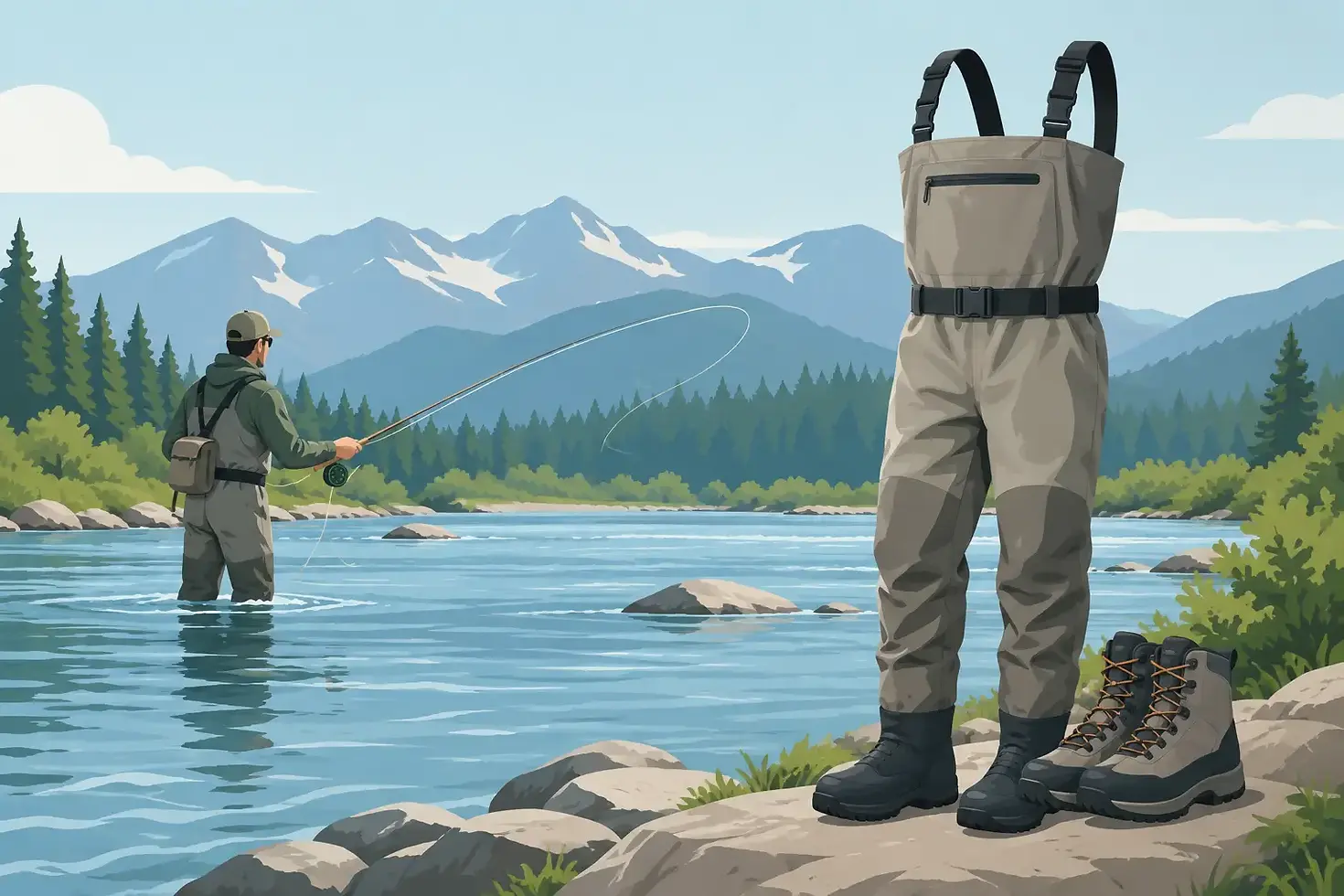
Best Fishing Waders for Serious Trout Anglers

The best fishing waders are the pair you stop thinking about halfway through a cold morning on the river. They keep water out, let you move naturally over slick rocks, and leave enough room for the layers that make a March tailwater session or a late-fall streamer day comfortable. For trout anglers, that matters more than a long feature list or the highest price tag.
Waders take more abuse than most pieces of fly fishing gear. They scrape against streamside brush, kneel in gravel, climb banks, and spend long hours flexing at the knees and seat. A smart purchase comes down to matching material, fit, boot style, and durability to the water you actually fish.
What Makes the Best Fishing Waders?
Breathable chest waders are the practical choice for most trout fishing. Modern breathable fabrics keep rain, splash, and river water outside while allowing moisture from sweat to escape better than old-style neoprene. That makes them useful from spring runoff through cool fall weather, especially when you are hiking between runs or covering a lot of water.
The number of waterproof layers matters, but it is not the whole story. A tougher multi-layer fabric in the legs and seat is valuable because those areas see the most abrasion. Reinforced knees are also worth having if you frequently kneel to release fish, rig flies, or work along low banks. More reinforcement can add bulk and cost, so an angler who fishes a small spring creek a few times each summer may not need the same build as someone who wades rocky freestone rivers every week.
Fit is equally important. Waders should give you room to step over rocks, crouch, and wear a base layer without pulling tight across the shoulders or knees. They should not be so loose that excess material catches on brush or folds uncomfortably inside your boots. The right fit is functional, not fashionable.
Breathable Fabric Versus Neoprene
For most US trout anglers, breathable waders offer the best balance of comfort and versatility. Pair them with lightweight pants or a thin base layer on warm days. Add fleece or insulated layers when water temperatures drop. One quality breathable pair can cover a broad range of conditions.
Neoprene waders still have a place in very cold water, particularly for anglers who stand in winter tailwaters for hours. They provide built-in insulation, but they are heavier, less breathable, and often too warm for active hiking. If your fishing season includes summer hatches, long walks, and changing weather, breathable waders are usually the better value.
Choose Wader Boots for Your Water
A wader is only as stable as the boot beneath it. Stockingfoot waders, which end in a neoprene sock and require separate wading boots, are the preferred setup for serious trout fishing. Separate boots provide better ankle support, a more secure fit, and the ability to replace one piece without replacing everything.
Bootfoot waders combine the wader and boot into one unit. They are convenient for occasional use, muddy access points, and anglers who want fast on-and-off simplicity. The trade-off is less precise boot fit, more bulk, and fewer choices in sole style. They can also be awkward on long hikes.
Rubber soles are durable, easy to clean, and work well on mixed terrain. Many anglers add removable studs for extra grip on algae-covered rocks or steep trails. Felt soles still provide excellent traction on certain slick river bottoms, but they stay wet longer and are restricted in some areas because they can carry invasive organisms. Always check local regulations before buying felt.
Boot sizing deserves more attention than it gets. Your wading boots need room for the stockingfoot neoprene bootie and the socks you plan to wear. Do not assume your street-shoe size will work. Follow the manufacturer’s size chart, then consider whether you fish mostly in thin summer socks or thick winter layers.
Buy for Durability, Not Just a Warranty
A warranty can be useful, but it is not a substitute for durable construction. Look closely at the seams, gravel guards, suspenders, belt, and attachment points. Welded or taped seams should lie flat and clean. Gravel guards should fit snugly around your boots so sand and small stones do not work their way inside. Suspenders should adjust easily and stay put through a full day of casting and hiking.
The wading belt is a safety feature, not an optional accessory. Wear it every time. It reduces the amount of water that can rush into your waders if you slip, and it helps keep the waders secure while you move. A belt with a sturdy buckle and enough adjustment for changing layers is a simple but worthwhile detail.
Pay attention to repairability, too. Pinholes happen, even with premium waders. A small leak is not necessarily a failed pair. Waders that can be patched easily at home can give you many more seasons of use. Dry them fully after each trip, avoid leaving them crumpled in a hot vehicle, and clean dirt from the fabric before storing them. These habits are cheaper than replacing gear early.
How Much Should You Spend?
There is no single price point that defines the best fishing waders. It depends on how often you fish and how hard you are on gear. Entry-level breathable waders can be a good choice for beginners, occasional anglers, or anyone building a complete fly fishing setup on a budget. The goal is to get a dependable fit and basic protection while saving room in the budget for essentials like boots, leaders, tippet, and proven trout flies.
Mid-range waders often hit the value sweet spot. They typically offer stronger fabric in high-wear zones, better suspenders, more comfortable cuts, and details such as hand-warmer pockets or waterproof storage. For the angler who fishes regularly throughout the season, those upgrades can make a noticeable difference.
Premium waders make sense for anglers who spend many days each year on demanding water. They tend to use lighter yet tougher materials, offer more refined mobility, and include better organization and repair support. They are not automatically necessary for catching trout. A well-fitted, properly maintained mid-range pair will outperform an expensive pair that is the wrong size or poorly cared for.
Get the Fit Right Before You Fish
When trying on waders, wear the layers you normally use on the water. Raise your knees, squat, take a long step, and reach as if you are casting. Check for tightness in the crotch, knees, chest, and shoulders. You should be able to move freely without the waders sagging excessively.
Chest height matters as well. Full chest waders provide the most versatility for river crossings, deeper runs, and colder weather. Waist-high waders are lighter and cooler for shallow summer streams, but they limit where you can safely wade. If you own one pair, chest waders are generally the more practical investment.
Do not overlook the stockingfoot bootie. A cramped bootie can make even a short day miserable, while an overly large one can bunch up and create pressure points. Your toes should not jam against the end when you lean forward or descend a bank.
A Simple Wader Setup for Trout Fishing
For most anglers, a breathable chest wader with reinforced legs, separate rubber-soled boots, a dependable belt, and a layered clothing system is the most useful setup. Add studs if your local rivers are consistently slick, and choose a wader with enough pocket space for small essentials such as tippet, floatant, indicators, and a fly box.
Waders do not catch trout on their own, but comfortable, stable gear keeps you in the right position longer. That means more careful drifts through a seam, more confidence crossing to the better run, and more time presenting the fly that matches what trout are eating. Buy the pair that fits your fishing, care for it between trips, and spend the rest of your attention where it belongs: reading the water.


