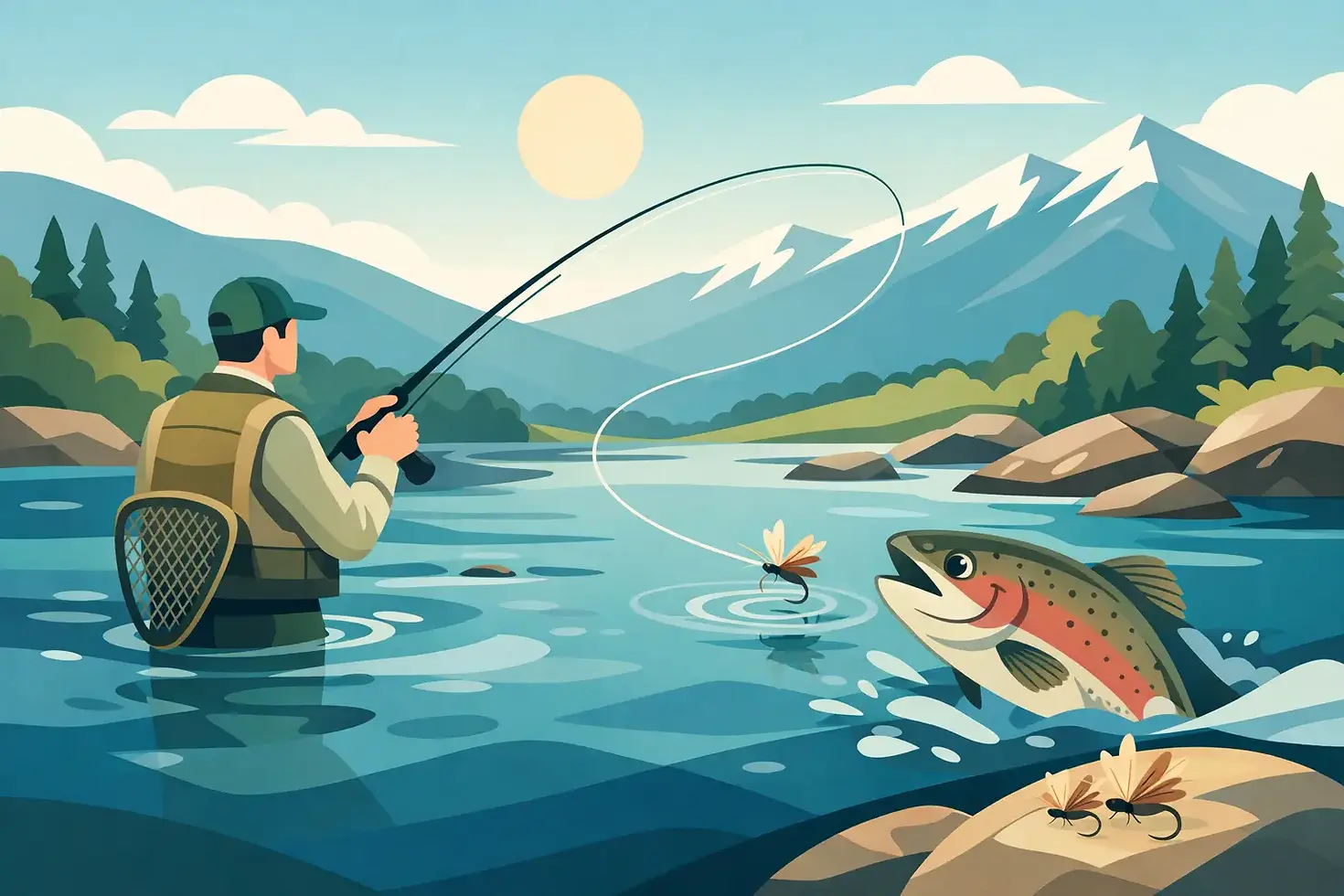
How to Fish Dry Flies for More Trout

A trout noses up, tips just under the film, and your fly disappears in a ring no bigger than a coffee cup. That moment is why so many anglers want to learn how to fish dry flies well. It looks simple from the bank. On the water, it is a game of drag, angles, timing, and choosing a fly that the trout will trust.
The good news is that dry fly fishing does not have to be complicated to be effective. If you focus on a few proven patterns, a clean drift, and the right water, you will catch more trout on top without stuffing your box with expensive extras. A lot of anglers struggle with dry flies not because they picked the wrong insect every time, but because the fly moved unnaturally or landed in the wrong lane.
How to fish dry flies starts with the drift
If your dry fly skates when the naturals are drifting dead, trout will often refuse it. If it drags across currents at a different speed than the bubbles around it, they notice. Trout live with a close-up view of the surface, and they are far better at spotting bad movement than most anglers think.
Start by watching the current before you cast. Look for the seam where fast and slow water meet, and notice whether insects are floating naturally or fluttering. In many trout streams and tailwaters, the best presentation is a dead drift. That means your fly should ride naturally with the current, without your leader pulling it sideways.
A shorter cast with a better angle usually beats a long cast with too much line on the water. Move closer when you can. Fish from below the trout when possible, and cast slightly upstream or up and across so your fly reaches the feeding lane first. A reach cast or a little extra slack can buy you a few more feet of natural drift, and that often makes the difference.
Pick proven patterns, not just pretty ones
You do not need thirty dry patterns to fish dry flies confidently. You need a few flies that cover the common trout foods and a range of sizes that match what is actually on the water.
For general searching, attractor dries and classic mayfly-style patterns do a lot of work. Elk hair caddis, parachute Adams, and comparaduns earn their place because they cover broad situations and float well. During a hatch, match the profile first, then the size, then the color. Anglers often overthink color and miss the bigger issue - a size 18 mayfly imitation usually gets more attention during a mayfly hatch than the exact right shade in the wrong size.
It also pays to think about visibility. A low-riding pattern may be perfect for the trout, but hard for you to track in broken water. There is no prize for losing sight of your fly all afternoon. In riffles or glare, a high-vis post or slightly bushier pattern can help you fish more effectively, even if it is a little less delicate.
Read where trout want to eat on top
Not every piece of trout water is good dry fly water. Some runs are better fished with nymphs. Some pools demand long leaders and tiny flies. Dry fly success goes up fast when you target fish that are already comfortable feeding near the surface.
Look first at softer edges beside faster current, tailouts, slick seams, foam lines, and gentle riffles. These places bring food to the fish without forcing them to burn energy. Trout holding in these lanes can slide up a few inches to sip emergers, duns, caddis, or terrestrials with little effort.
In pocket water, trout often make fast decisions. You can get away with a slightly rougher cast there if the drift is short and clean. On flat water, the opposite is true. The fish have more time to inspect your fly, so leader length, fly size, and landing softly matter more. That is one reason beginners often do better fishing dry flies in broken water than on a glassy spring creek.
Leader setup matters more than most anglers want to admit
A lot of dry fly problems start with leader control. If your tippet is too heavy, the fly may not land naturally. If your leader is too short for the water, the line can slap down near the fish or create instant drag.
For many trout situations, a 9-foot leader is a solid starting point. In smaller streams or rough pocket water, that may be enough. In clearer, flatter water, going longer with finer tippet often helps. The trade-off is that longer leaders are harder to turn over, especially in wind or with bushier flies.
Tippet choice depends on fly size and water type. Small dries usually fish better on lighter tippet, while larger caddis or attractors can handle a bit more. There is no reason to go ultra-fine if the current is broken and the fish are not leader shy. On the other hand, if trout are sipping size 20 mayflies in a slow seam, heavier tippet can cost you eats.
Keep your dry fly floating with a good dressing, but use it carefully. Too much floatant on some delicate patterns can make them sit wrong. With low-riding mayflies, treating the wings and hackle while letting the body sit in the film can look more natural.
The cast is only half the job
Many anglers make a decent cast and then ruin the drift immediately. As soon as the fly lands, manage your line. Lift or mend only as much as needed to keep conflicting currents from pulling the fly. Big, splashy corrections tend to move the fly and put fish down.
Tracking the fly matters too. Watch both the fly and the water around it. Sometimes you will lose sight of a small dry in glare, but a subtle rise form near your target lane still tells you when to set. Keep just enough contact to respond, but not so much tension that you drag the fly.
And when a trout eats, do not rush the hook set. One of the classic dry fly mistakes is striking at the splash instead of the fish. Pause just enough to let the trout turn down. It is a tiny delay, but it helps. If you miss fish repeatedly, there is a good chance you are reacting too fast.
How to fish dry flies during hatches and between them
A visible hatch makes dry fly fishing easier, but you do not need bugs pouring off the water to fish dries. There are really two common situations: matching active surface feeding and prospecting likely water.
During a hatch, pay close attention to what stage the trout are eating. If you see noses and gentle sips, they may be taking emergers or cripples more than fully upright duns. If caddis are skipping and skittering, a little movement may help. This is where “it depends” really matters. A dead-drift mayfly presentation and an active caddis presentation are not the same job.
Between hatches, search with confidence patterns in places where trout are willing to move. Undercut banks, pocket water, shaded seams, and grassy edges can all produce fish. In summer, terrestrials like ants, beetles, and hoppers become especially useful. They are not hatch-specific in the same way as mayflies, and trout often eat them with less hesitation.
Fishing a dry-dropper can also be smart when trout are looking up occasionally but not fully committing to the surface. Purists may prefer a dry alone, but catching fish usually beats proving a point.
Common mistakes that cost you trout
The biggest mistake is false casting too much over the fish. Every extra cast adds risk - drag, flash, line slap, or a bad angle. Make fewer, better casts.
The next problem is changing flies too often. If your drift is poor, the tenth fly will not save you. Fix presentation first. After that, check size and profile.
Another common issue is fishing the wrong water with too much hope. If trout are glued to the bottom in cold flows or heavy pressure has them refusing everything on top, a dry may not be the highest-percentage play. That does not mean dry flies are not working in general. It means conditions are asking for a different tool right then.
Finally, a lot of anglers stop learning after they catch a few fish on top. The best dry fly anglers keep adjusting. They change angles, leader length, drift length, and fly style based on what the fish show them. That is usually cheaper and more effective than buying a pile of random patterns.
Keep your dry fly box practical
A dependable dry fly box should be built around patterns you will actually fish, not just patterns that look good under shop lights. Stock the basics in fish-catching sizes, replace what gets chewed up, and carry enough duplicates for strong hatch windows. Quality matters here because poorly tied dries that sink fast or twist your leader are false savings.
That is one reason anglers who want proven trout fly patterns without fly shop markup tend to keep things practical. A well-chosen box of durable dries will outfish an oversized collection every time.
Dry fly fishing is at its best when you slow down enough to see what the river is showing you. Watch the current, trust simple patterns, and work on getting one honest drift through the right lane. When that next trout rises and your fly disappears, it will feel a lot less like luck.


