Nymphing Tippet vs Leader for Trout Fishing

A nymph rig can look perfect at the surface and still fish poorly below it. Often, the problem is not the fly pattern or the drift. It is the connection between your fly line and your nymphs. Understanding nymphing tippet vs leader helps you build rigs that sink correctly, drift naturally, and hold up when a good trout eats.
For trout anglers, the simple version is this: your leader forms the main connection from fly line to terminal tackle, while tippet is the smaller, replaceable material tied to the end of that leader. The better answer matters more, especially when you are fishing two nymphs, a heavy tungsten bead, split shot, or a tight-line setup in fast water.
Nymphing Tippet vs Leader: The Basic Difference
A tapered leader is a single length of monofilament or fluorocarbon that starts thick at the fly-line end and gradually becomes thinner toward the tip. That taper turns over your rig, transfers energy from the cast, and gives you a workable foundation for adding indicators, weight, and flies.
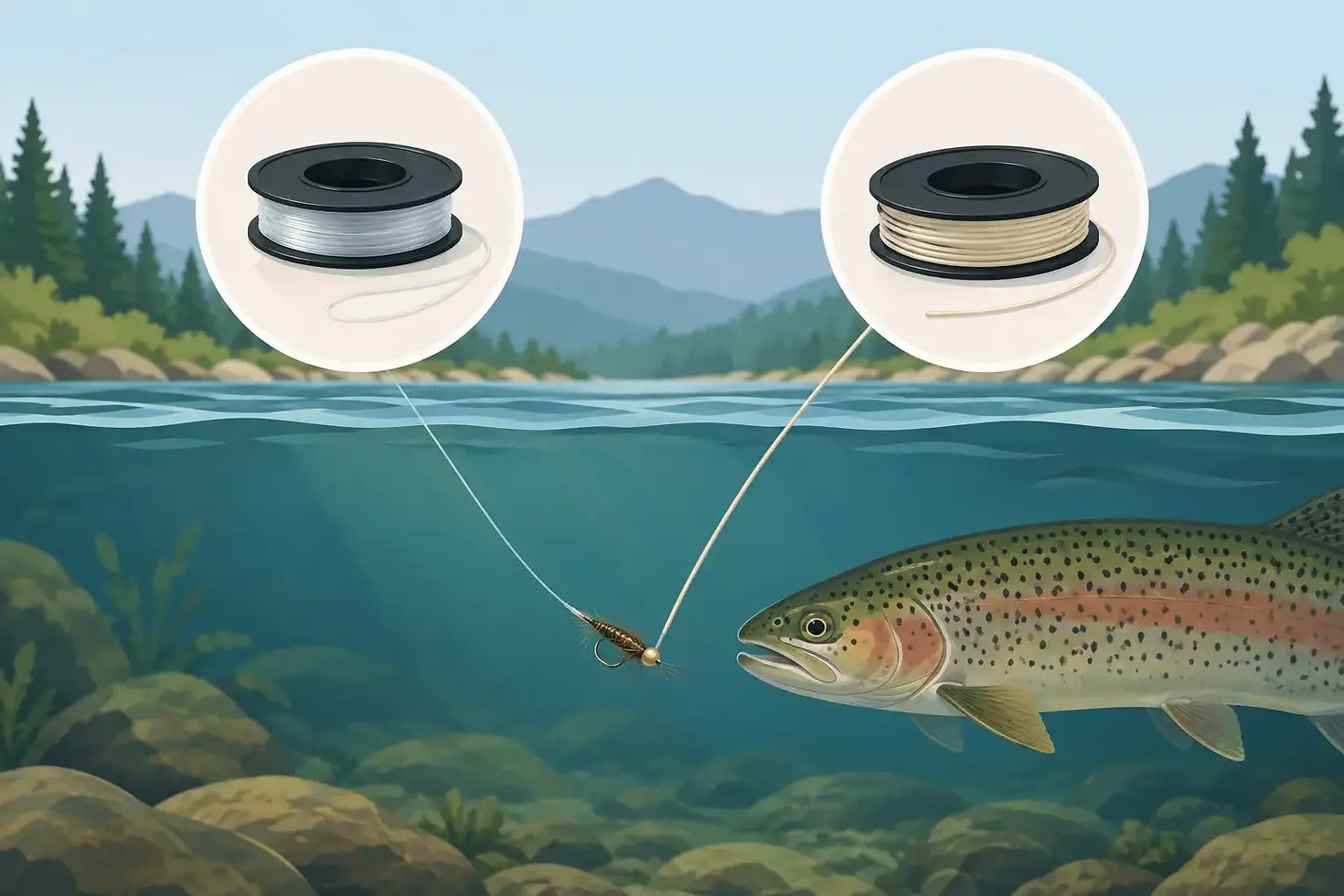
Tippet is level-diameter material sold on spools. It does not taper. You tie it onto the leader to extend your setup, replace worn material, change fly size, or build droppers. Since nymphing frequently puts flies near rocks, current seams, and trout that can be surprisingly selective, tippet is the part you will change most often.
Think of the leader as the frame and the tippet as the working end of the rig. You can fish a nymph directly from a leader, but once you shorten that leader with fly changes and break-offs, its taper becomes less useful. Adding tippet preserves the leader and gives you more control over length and diameter.
Why Nymph Rigs Need a Different Approach
Dry-fly fishing often asks a leader to turn over a light fly with minimal disturbance. Nymphing asks your system to do something different: carry weight, reach depth, and maintain contact while drifting naturally. That changes what makes a good leader-and-tippet setup.
A standard 9-foot tapered leader works well for many indicator nymph rigs. It is easy to cast, readily available, and versatile enough for small streams, moderate rivers, and everyday trout fishing. Start with a 4X or 5X leader for many situations, then add tippet below the indicator or to the end of the leader as needed.
However, a long, delicate tapered leader is not always the best choice. If you are fishing a heavy double-nymph rig under an indicator, an overly fine leader butt can struggle to turn over the weight. In that situation, a sturdier leader, a short butt section of heavier material, or a purpose-built nymphing leader can make casting less frustrating.
Tight-line nymphing is another case where the traditional leader changes. Many anglers use a longer leader built from a stout butt section, a highly visible sighter section, and fine tippet. The heavier upper sections help manage the rig, the sighter helps detect subtle takes, and the tippet delivers the flies with less drag. This is specialized gear, but the principle is useful for any angler: build the upper part for control and the lower part for presentation.
Choosing Leader Length for Nymphing
Leader length depends on the water, the depth you need to reach, and the style of nymphing you are doing. There is no single best length for every trout stream.
For small, brushy creeks, a 7 1/2-foot leader is often practical. Short casts, limited backcast room, and pocket water do not always reward a long leader. You can add 12 to 24 inches of tippet when you need a little more separation between the fly line and your nymph.
On average rivers, a 9-foot leader is the dependable all-around choice. It provides enough length for clean drifts without becoming difficult to handle. For indicator fishing, add tippet below the indicator based on water depth, then account for the fact that your flies may not drift directly beneath the float in faster current.
Longer 10- to 12-foot leaders are useful on clear tailwaters, smooth runs, and technical water where trout notice fly line and thick material. They can also help create distance between an indicator and the flies. The trade-off is casting control. A long leader paired with weight, two flies, and an indicator can tangle quickly if you try to force a tight loop.
Choosing the Right Tippet Size
Tippet diameter affects two things that matter immediately: how naturally the fly drifts and how well the rig survives a snag or a strong fish. Fine tippet usually improves presentation, but it is less abrasion-resistant and easier to break. Heavier tippet is tougher and turns over weighted rigs better, but it can reduce takes in clear, pressured water.
For many trout nymphing situations, 4X and 5X are the sweet spots. Use 4X when fishing larger stonefly nymphs, heavy tungsten patterns, off-color water, or strong current where a bigger fish may eat. It is also a smart starting point when you are learning to manage split shot and snags.
Move to 5X for standard mayfly nymphs, caddis larvae, and most smaller beadhead patterns. It offers a good balance of strength and presentation. On clear tailwaters or when fishing size 18 to 22 nymphs, 6X can produce more takes, particularly behind a larger attractor fly.
Do not choose tippet by fly size alone. Water clarity, current speed, bottom structure, and the size of trout all matter. A size 18 Pheasant Tail in stained spring runoff may fish just fine on 4X. That same fly in low, clear summer water may call for 5X or 6X.
Monofilament or Fluorocarbon for Nymphs?
Both materials catch trout. Monofilament is generally more supple, easier to manage, and often less expensive. It is a solid choice for leaders, dry-dropper rigs, and anglers who want one material that handles a wide range of fishing.
Fluorocarbon is denser and more abrasion-resistant, which makes it popular for subsurface nymphing. It can help small flies get down and holds up well when the rig ticks along gravel and rocks. Many anglers use a monofilament leader above the indicator and fluorocarbon tippet below it.
The trade-off is cost and handling. Fluorocarbon can be stiffer, and it is not necessary for every situation. If the water has a little color, trout are feeding aggressively, or you are fishing larger nymphs, quality monofilament tippet is plenty effective. Put your budget toward dependable flies and enough extra tippet to replace damaged sections when needed.
Building a Simple, Dependable Nymph Rig
For a basic indicator setup, start with a 9-foot 4X or 5X leader. Place your indicator high enough to reach the zone, then tie on a section of tippet below it. In a three-foot run, that might mean four to five feet of tippet because current and weight create an angled drift rather than a straight vertical line.
Tie your point fly to the end of the tippet, then add a second nymph from the bend of the first fly or from a tag section above it. A larger, heavier pattern such as a stonefly nymph, jig-style beadhead, or weighted attractor makes a good point fly. A smaller Pheasant Tail, Zebra Midge, Hare's Ear, or caddis larva can trail behind as the dropper.
Use enough weight to reach the bottom occasionally, not constantly. If you never touch bottom, add weight or choose a heavier point fly. If you snag every drift, reduce weight, shorten the distance to the flies, or adjust your lane. The goal is controlled contact near the trout's feeding level.
Check your tippet after every fish, snag, or hard pull. Run it through your fingers and look for rough spots, curls, or pale abrasion marks. Replacing 18 inches of tippet is cheaper than losing a fish, an indicator, and two proven trout fly patterns to a break-off.
Common Mistakes With Leader and Tippet
The most common mistake is fishing a leader that has been cut back too far. Once the tapered section becomes short and thick near the end, it can hurt presentation and make knots bulky. Add tippet before the leader gets too short, and replace the leader when its taper is no longer doing its job.
Another mistake is using one tippet size for every condition. A spool of 4X may cover a lot of fishing, but carrying 5X and 6X gives you better options when the water clears or trout key on small nymphs. Likewise, keeping 3X or 4X available makes heavy, high-water rigs easier to manage.
Finally, do not mistake more length for better drift. Extra tippet can help on wary trout, but too much slack between the indicator and flies delays strike detection. Choose a length that reaches depth while still letting you set the hook quickly.
A well-built nymph rig is not complicated. Start with a leader that can control your cast, add tippet sized for the water and fly, and adjust until your flies reach the zone without dragging. Those small changes make proven nymph patterns fish the way they were meant to - and give you a better chance when the indicator pauses, twitches, or disappears.


