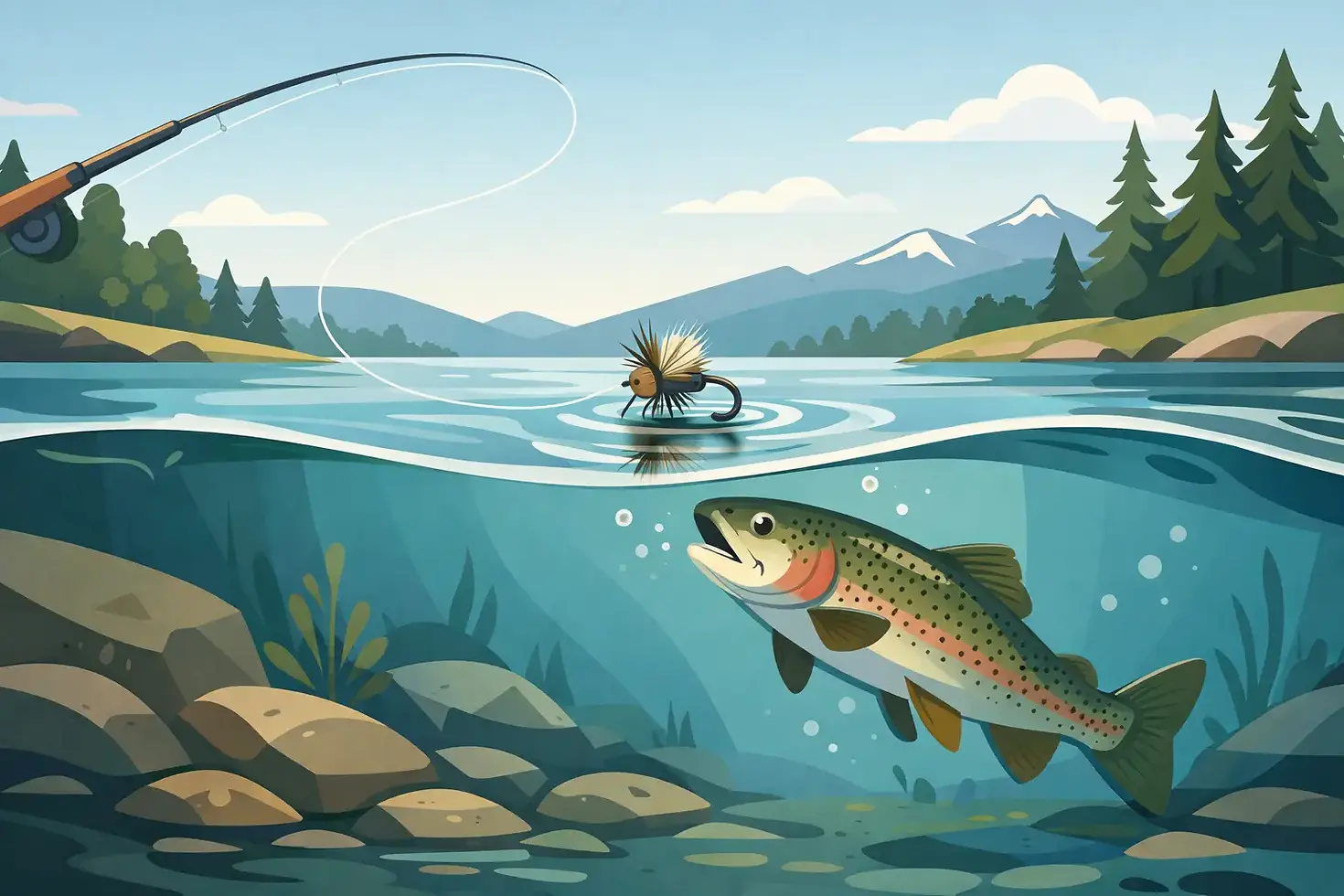
When to Use Dry Flies for Trout

A trout nosing just under the film can make you second-guess everything. Was that a rise to adults, an emerger, or a fish sipping midges you can barely see? Knowing when to use dry flies for trout is less about wishful thinking and more about reading what the fish, the bugs, and the water are telling you.
Dry-fly fishing gets plenty of attention because it is visual, technical, and flat-out fun. But dry flies are not the right answer all day, every day. The anglers who do well with them are usually the ones who understand timing. They know when trout are willing to look up, when surface food is concentrated enough to matter, and when a dry is better as an indicator than as the main meal.
When to use dry flies for trout
The short answer is this: use dry flies when trout are feeding on or near the surface, or when conditions make surface food easy to spot and worth the effort. That usually happens during hatches, spinner falls, terrestrial activity, and low-light feeding windows. It can also happen in broken pocket water where trout have little time to inspect a fly.
That said, surface rises alone do not always mean a standard dry fly is the best choice. Some rises are splashy and aggressive, which often points to caddis or attractor opportunities. Other rises are subtle dimples that suggest tiny midges or emergers. If fish are feeding an inch under the film, a high-floating dry may be close, but not close enough.
The best approach is to think in terms of feeding lane and feeding level. If trout are consistently taking insects off the top, fish a dry with confidence. If they are bulging under the surface or refusing your fly at the last second, you may need a smaller pattern, a lower-floating imitation, or a dry-dropper setup.
The clearest signs trout are ready to eat on top
Rising fish are the obvious signal, but not all rises mean the same thing. A clean sip with barely a ring on the water often means mayflies, midges, or spent insects. A louder slash can mean caddis skittering, stoneflies, or even opportunistic trout chasing larger food.
Visible bug activity matters just as much. If you see duns riding the current, caddis bouncing over riffles, or terrestrials blowing into the water, trout have a reason to look up. Even one or two fish rising steadily can justify switching to a dry, especially if they are feeding in a repeatable lane.
Water type also gives clues. Slick seams, tailouts, foam lines, and gentle eddies are classic dry-fly water because surface insects collect there and trout can feed efficiently. In fast pocket water, trout are often less selective, so a buoyant attractor dry can produce even without a heavy hatch.
Light and weather can tip the odds in your favor. Cloud cover often extends a hatch and gives trout more confidence near the surface. Warm afternoons can bring on spring and summer bug activity. Wind, on the other hand, can either help by knocking terrestrials into the water or hurt by making drag control harder.
Hatches are the classic answer
If you want the highest-percentage situations for dry flies, start with hatches. Mayflies, caddis, midges, and stoneflies all create windows when trout feed on top with purpose. During these periods, matching size, silhouette, and behavior matters more than fancy casting.
Mayfly hatches are the textbook dry-fly scenario. Duns drift helplessly on the surface, and trout often set up in predictable lanes to intercept them. If fish are rising steadily and you can identify the general size and color, a proven mayfly dry is usually the first place to start.
Caddis can be a little different. Adults often skate, flutter, or bounce, so trout may feed more aggressively. A dead drift works much of the time, but a slight twitch can help if fish are keyed on active adults. This is one of those situations where presentation can matter as much as the pattern.
Midge hatches can be excellent, especially on tailwaters and during colder months, but they also test your patience. Trout may sip tiny insects in flat water with maddening precision. You can catch fish on dries here, but the margin for error is smaller. Fine tippet, small patterns, and a drag-free drift become non-negotiable.
Stoneflies are a bigger-profile option and often simpler to fish. During golden stone or salmonfly windows, trout are willing to move farther for a meal. Even outside a true hatch, a larger stonefly dry can pull fish from pocket water in summer, especially along banks and structure.
Terrestrials can make dry-fly season last longer
A lot of anglers think dry-fly fishing begins and ends with aquatic hatches. That leaves fish on the table. In summer and early fall, ants, beetles, hoppers, and other terrestrials can be some of the most dependable surface food available.
This is especially true on grassy banks, meadow streams, and rivers with overhanging vegetation. Windy afternoons can drop enough land-based insects into the current to keep trout looking up for hours. Unlike technical hatch fishing, terrestrial fishing often gives you a little more leeway. Trout are usually keying on shape and vulnerability more than exact details.
Hoppers get the headlines, but ants and beetles are often more consistent. They are common, they drift naturally, and trout see them often. If there is no obvious hatch but the season and riverbank suggest terrestrial activity, a dry fly is still very much in play.
Water conditions matter as much as bug activity
When anglers ask when to use dry flies for trout, they usually focus on insects first. That makes sense, but water conditions can be just as important. Trout have to feel comfortable feeding near the surface. If they do not, even a strong hatch may not pull many fish up.
Low to moderate flows often improve dry-fly fishing because trout can hold in softer water and inspect food in defined lanes. Clear water can be excellent if you stay stealthy, but it also means fish get a better look at your fly and leader. In that case, accurate casts and clean drifts matter more than throwing a dozen patterns at the problem.
Slightly broken or riffled water is often ideal. It hides the leader, reduces trout wariness, and gives your dry a more forgiving presentation. Fast pocket water is also underrated. If trout only have a split second to decide, a durable, visible pattern can be extremely effective.
High, off-color water is generally tougher for dry flies, though not impossible. Big attractors, stoneflies, and foam patterns can still work tight to banks or in soft edges. But if fish are hugging the bottom and visibility is low, nymphs usually become the better percentage play.
Times of day that favor dry flies
Morning can be slow for dry flies unless you are dealing with midges, summer terrestrials, or an early hatch. As the day warms, insect activity usually increases. Many mayfly and caddis hatches build from late morning into afternoon, especially in spring and early summer.
Evening is often prime time. Spinner falls, caddis flights, and calm water can create some of the best surface feeding of the day. The trade-off is that fish may become more selective in softer light and flatter water. If you get refusals, go smaller before you go bigger.
In summer, midday terrestrial fishing can be excellent, particularly with a little breeze. In winter, your dry-fly opportunities may be narrower and centered on the warmest part of the day. Tailwaters can be the exception, since stable flows and steady midge activity may offer surface action in colder months.
When a dry fly is the right tool, even without obvious rises
There are days when you do not see much happening on top, but a dry is still the smartest choice. Small streams are a good example. Trout in confined water often react quickly to an attractor dry because they do not have much time to inspect it. A high-floating pattern placed along undercut banks, seams, or plunge pools can outfish a more technical subsurface setup simply because it covers water efficiently.
A dry-dropper rig is another practical answer. Even if trout are not fully committed to surface feeding, a dry can suspend a nymph and still get eaten. This is one of the most useful ways to fish proven trout fly patterns when conditions are mixed. You are not forcing the dry-fly game, but you are giving yourself two chances in one drift.
There is also the visibility factor. In rough water, a larger dry can help you track the drift and control the presentation better than a tiny indicator or subtle yarn setup. That does not mean the dry is always the main target. Sometimes it is the strike detector with upside.
Common mistakes with dry flies
The biggest mistake is fishing a dry because you want to, not because the conditions support it. Every angler loves seeing the take, but trout do not care what is fun for us. If fish are glued to subsurface food, forcing a dry all afternoon usually wastes good water.
Another mistake is ignoring rise form. If trout are bulging just under the surface, changing from one high-floating dry to another may not solve the problem. You may need an emerger, a cripple, or a lower-profile pattern. Close enough is not always close enough.
Drag is the other major problem. Good dry-fly patterns catch more fish when they float naturally, and even proven flies look wrong when they skate unintentionally across a flat seam. Better mends, longer leaders, smarter casting angles, and shorter drifts often fix more problems than a fly change.
A practical way to decide
Before you tie on a dry, ask three questions. Are trout feeding high enough in the water column to notice it? Is there enough surface food to make looking up worthwhile? Can you present the fly naturally in the water you are fishing?
If the answer is yes to all three, fish the dry with confidence. If only one or two are true, you may still catch trout, but your odds change. That is where experience helps, and so does keeping a box stocked with durable, affordable patterns you are not afraid to fish hard. Discount Quality Flies has built its reputation around exactly that kind of practical value.
The best dry-fly anglers are not the ones who always fish dries. They are the ones who recognize the window when trout want them - and make the most of it while it lasts.


