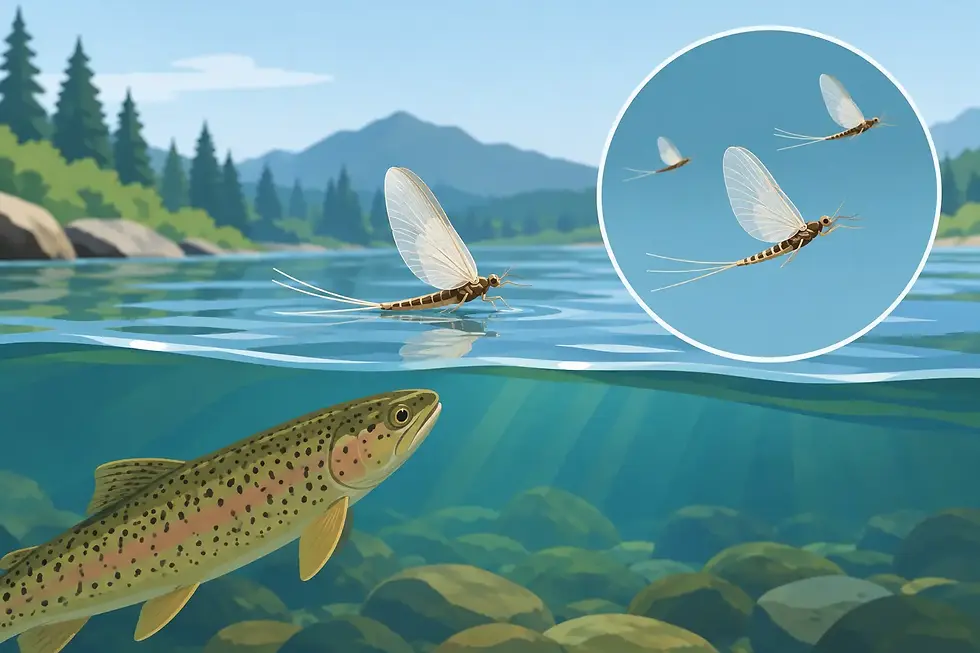
Best Nymph Patterns for Pocket Water Streams

Pocket water gives trout everything they need: food pushed by current, broken surface cover, and a short sprint to a protected lie. The challenge is that nymph patterns for pocket water must get down quickly, look alive in turbulent flow, and hold up after repeated drifts through rock gardens. A beautiful but lightly weighted fly that never reaches the fish is not much use here.
Pocket-water streams reward anglers who fish efficiently. Rather than spending ten minutes on one seam, make a few controlled drifts through every likely cushion, slot, and plunge pool. The right flies let you fish those short windows with confidence.
What Makes a Good Pocket-Water Nymph?
In fast, broken current, trout have little time to inspect every insect. They often react to a familiar shape, the right size, and a natural drift more than tiny details. That does not mean color never matters, especially on clear, pressured water, but weight and profile usually come first.
The best pocket-water nymphs sink fast without becoming oversized. Tungsten beads are especially useful because they put weight at the fly without forcing you to use so much split shot that casting becomes awkward. Slim bodies also cut current better than fluffy, high-drag patterns.
Durability matters, too. Pocket water eats flies. A pattern may tick bottom, scrape rocks, and take several fish in an afternoon. Choose proven trout fly patterns with secure beads, durable thread wraps, and materials that stay intact when conditions are rough.
Core Nymph Patterns for Pocket Water
You do not need a box full of one-use patterns. A compact selection covering mayflies, caddis, stoneflies, and general attractors will handle most small rivers and freestone streams.
Pheasant Tail Nymph
The Pheasant Tail is one of the most dependable mayfly nymph imitations ever tied. Its slim silhouette helps it sink, and its dark, natural color works in clear water and under cloudy skies. Fish bead-head Pheasant Tails in sizes 14 through 18 when smaller mayflies are likely, or use a size 12 to 14 as a more visible searching fly.
It shines in moderate pockets and shallow seams where trout are feeding on drifting mayfly nymphs. In especially heavy current, use a tungsten-bead version or fish it behind a heavier anchor fly.
Hare's Ear Nymph
A Hare's Ear earns its place because it suggests several food sources at once. It can pass for a mayfly nymph, caddis larva, or an indistinct natural swept loose by high water. The buggy body and soft fibers create movement that helps in turbulent flow.
Sizes 12 to 16 are practical for most pocket-water fishing. A gold bead adds flash and gets the fly down, while a more subdued version can be better when water is low and clear. If you are unsure what trout are eating, this is a smart fly to start with.
Prince Nymph
The Prince Nymph is a strong choice when water is fast, slightly off-color, or deep enough to require a fly trout can find quickly. Its white wings, peacock body, and contrasting tail give it more visibility than many natural patterns. It is not a perfect imitation of one insect, but pocket-water trout are often willing to eat a well-presented attractor.
Fish Princes in sizes 12 to 16, particularly in broken runs below riffles and at the head of plunge pools. It also works well as the top fly in a two-nymph rig behind a heavier stonefly pattern.
Copper John
A Copper John is compact, heavy, and easy to see. Those three traits make it useful when you need to reach the bottom quickly in narrow chutes. The wire body adds weight and flash without creating much drag, and the fly remains effective after plenty of hard use.
Copper Johns are particularly useful in sizes 14 to 18 when trout are keyed on smaller nymphs but the current is still strong. Red, copper, and green variations all have a place, though copper is a reliable starting point for general fishing.
Perdigon Nymph
When speed and depth are the priority, few flies beat a Perdigon. Its smooth, coated body slips through the water with very little resistance, and the tungsten bead gets it into the strike zone quickly. Perdigons are not meant to be fuzzy or lifelike. They are built to sink and produce.
Carry black, olive, and purple versions in sizes 14 to 18. A bright hotspot can help in stained water or dim light, while a plain dark body is often better in clear, shallow pockets. This is a pattern worth fishing whenever your flies keep drifting above the fish.
Stonefly Nymphs
Big stonefly nymphs are a natural fit for rocky mountain streams. They are common in many trout rivers, and their larger profile gives trout a substantial meal. More importantly, a weighted stonefly can serve as an anchor fly that takes your entire rig down.
Pat's Rubber Legs, black stonefly patterns, and golden stonefly nymphs in sizes 6 to 12 are all useful choices. Use darker versions in shaded water or when natural stones are common. Choose golden or brown patterns when the stream has golden stoneflies or when you want a slightly brighter searching fly.
Match the Fly to the Pocket
Not every pocket requires the same setup. In a shallow, soft-edged cushion behind a boulder, a single size 14 Hare's Ear or Pheasant Tail may drift naturally enough with only a small indicator or tight-line approach. Adding too much weight can snag the bottom before the fly reaches the trout.
In a hard, deep slot between rocks, use a tungsten Perdigon or stonefly nymph as the point fly. A smaller Pheasant Tail, Zebra Midge, or caddis pupa can trail 12 to 18 inches behind it. The heavier fly gets the rig down, while the smaller fly gives selective trout a more natural option.
Water color changes the decision as well. In clear water, favor natural olive, brown, black, and gray patterns with minimal flash. After rain or during runoff, larger stoneflies, Princes, and bead-head Hare's Ears are easier for trout to locate. The goal is not to make every fly loud. It is to make it visible enough for the conditions.
Rigging for Fast, Short Drifts
Pocket-water drifts are often only three to six feet long. That means the first cast must count. Cast slightly upstream of the target so the fly has time to sink before it reaches the fish-holding cushion. Keep as much line off the water as possible and lead the drift with the rod tip.
Tight-line nymphing is excellent for close, broken water because it provides direct contact with the flies. You can feel or see subtle takes before current creates slack. A small yarn indicator or compact strike indicator is still useful when fishing deeper pockets, especially if you need to manage a two-fly rig from farther away.
Weight should be adjusted often. If you are not occasionally ticking rocks, you are probably too high in the water column. If you snag on every drift, remove split shot, shorten the distance between your indicator and flies, or switch to a less heavily weighted pattern. Productive pocket-water fishing is a constant balance between depth and control.
A Practical Pocket-Water Fly Box
For most trout streams, build around a few durable patterns in multiple sizes instead of buying a dozen near-duplicates. A useful working selection includes bead-head Pheasant Tails and Hare's Ears from size 12 to 18, Perdigons and Copper Johns from 14 to 18, Princes in 12 to 16, and stonefly nymphs in 6 to 12. Add caddis pupa and Zebra Midges when you fish tailwaters or streams with consistent small-insect activity.
At Discount Quality Flies, the best value is usually in stocking enough of the patterns you actually lose and fish hard. Pocket water is not the place to protect your last good fly. Carry duplicates, change flies when the drift is wrong or the fish refuse, and keep working upstream.
The next time a stream looks too fast or too broken to fish carefully, slow down just enough to see the soft water behind each rock. Put a weighted nymph into that small window, get it deep on the first pass, and be ready. Trout often live exactly where most anglers walk past.