How to Read Trout Rises and Choose the Right Fly

A trout rises once under an overhanging branch, then again six feet upstream. That second rise is the clue. Learning how to read trout rises is less about spotting rings on the water and more about recognizing a trout's feeding position, the insect stage it wants, and the drift it will accept.
A rise is useful information, but it is not an automatic signal to tie on the biggest dry fly in your box. Trout may be taking adult mayflies, emerging insects, caddis skittering on the surface, or even sipping tiny midges trapped in the film. Watch long enough to see the pattern, then choose a proven fly that solves the specific problem in front of you.
Start With the Shape of the Rise
The surface disturbance tells you where the trout is feeding in the water column. It will not identify every insect by itself, but it can quickly narrow your choices between a dry fly, emerger, and nymph.
The clean sip
A sip looks like a small dimple, often followed by a gentle ring spreading across flat water. You may see the trout's snout break the surface, but there is little splash. This usually means the fish is taking small adults or emergers sitting in or just under the surface film.
On a spring creek or a calm tailwater, a steady sipping fish may be keyed in on insects as small as size 18 to 24. A bulky size 12 dry fly can land like a pebble and get ignored. Start with a smaller mayfly dry, midge dry, or a low-riding emerger. If the rise continues beside your fly without a take, your pattern may be sitting too high or may simply be the wrong size.
The head-and-tail rise
When you see a trout's head appear, followed by its dorsal fin or tail, it is often feeding just below the surface. The fish is rolling through emerging mayflies, caddis pupae, or other insects caught in the film.
This is one of the most commonly misread rises. Anglers see a tail and assume the trout is aggressively eating dry flies. Often it is taking insects before they fully emerge. Fish an emerger behind a visible dry, or use a soft-hackle pattern just beneath the surface. Your dry fly becomes both an indicator and a possible meal, while the trailing pattern covers the level the trout is likely using.
The splashy or slashing rise
A sharp splash, boil, or visible wake usually points to an active fish chasing mobile food. Caddis are the classic example. Adults can skate, flutter, and lift off before a trout reaches them, which makes trout move with more urgency.
A caddis dry fly dead-drifted through the lane is a good first move. If trout are clearly chasing, add a short skate at the end of the drift or let the fly twitch lightly. Do not overdo the action. One natural-looking movement often works better than repeatedly ripping the fly across the current.
The porpoise or boil
A broad boil can look like a trout is feeding on top, yet its back may never break the surface. This often means the fish is taking emerging insects just under the film. It can also happen when trout are eating spent mayflies lying flat on the water.
Try an emerger first when the fish is boiling steadily. If you see motionless mayflies with upright wings or spent-wing insects drifting downstream, switch to a low-floating adult pattern that presents flush in the surface film.
Watch the Rhythm Before You Cast
One rise can be random. Three or four rises at a predictable interval reveal a feeding trout.
Stay still and watch for at least a minute when conditions allow. Note where the trout rises, how far it moves, and whether it repeats the same path. A fish feeding every 10 seconds in a two-foot-wide lane is giving you a much higher-percentage target than a trout that rises once and disappears for five minutes.
Current complicates the picture. Trout often hold below the visible rise, especially in fast water. A fish may drift sideways or forward to intercept food, then return to its holding position. In slower water, it may hold nearly in place. Aim your cast so the fly arrives naturally at the rise point, but do not cast directly on top of the fish. Land upstream and give the fly time to settle into the feeding lane.
Match the Rise to What Is Actually on the Water
Your eyes should move from the rise to the drift. Look for insects on the surface, floating shucks, adult caddis bouncing along the current, or tiny midges collecting in foam lines. Turn over a streamside rock if you are unsure what is hatching below the surface.
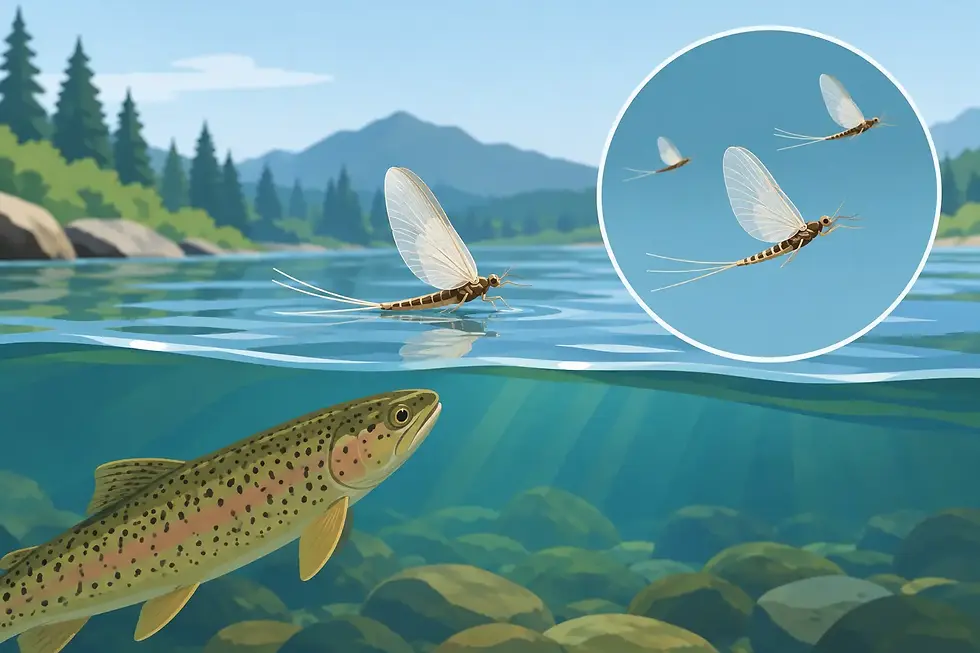
Mayfly hatches often produce consistent, delicate sipping. If you can see upright-winged adults drifting, match their general size and color first. A pale mayfly pattern during a light-colored hatch or a darker pattern during an evening hatch will get you close, but profile and presentation matter as much as exact shade.
Caddis activity is usually livelier. Watch for tent-winged adults fluttering above the water or skating downstream. Trout may take adults, pupae rising toward the surface, or both. Carrying caddis dries, caddis pupae, and a few soft hackles lets you cover the whole event without guessing wildly.
Midge feeding can be subtle and frustrating. If you see tiny, repeated dimples in slow seams but cannot identify a larger insect, think small. A sparse midge dry or a film-riding emerger is often more effective than changing to a larger attractor pattern.
Do not ignore terrestrials. During warm months, a loud rise tight to grass, banks, or low branches may be a trout waiting for hoppers, beetles, or ants. Those fish can be selective about placement rather than imitation. A well-drifted terrestrial close to the bank may outperform a hatch-matching dry in that situation.
Read the Water Around the Rise
The same rise means different things in different water. In a glassy pool, trout have time to inspect every fly. Use a longer, finer leader, minimize false casts, and favor small, realistic patterns. In broken pocket water, a trout has much less time to decide. A visible dry fly and a short, accurate drift can be more practical.
Foam lines, current seams, and the soft edges beside faster water are reliable feeding lanes because insects collect there. If rises repeat along a seam, cast upstream of the first rise and let the current carry your fly through the entire lane. Avoid lining the fish with your leader. A trout may tolerate a fly that is slightly off-color, but it rarely tolerates drag.
In strong currents, use slack wisely. An upstream reach cast, a little extra leader on the water, or a position change can buy a longer drag-free drift. On flat water, too much slack makes it harder to set the hook on a subtle sip. The right presentation depends on the water as much as the fly.
Choose a Fly With a Simple Decision Process
When trout are visibly rising, begin with the level of the take. A clear surface sip calls for a dry fly. A head-and-tail rise or boil calls for an emerger just under the film. A splashy chase during caddis activity calls for an adult caddis or a lightly skated pattern.
Then match size before chasing an exact color. Trout routinely reject a fly that is too large, while a pattern that is close in size and silhouette often gets eaten. If you can catch or photograph an insect, use it as a reference. If not, compare your fly to what you can see on the water.
Finally, adjust one variable at a time. If a trout rises three times near your fly but refuses it, change size, stage, or presentation - not all three at once. Switch from a high-floating adult to an emerger, or from a size 14 to a size 18. That approach teaches you what the fish want and keeps a rising trout from becoming a guessing game.
When Rises Stop or Trout Refuse
A hatch can fade without warning, but a fish may still be feeding below the surface. If rises stop, do not immediately leave the run. Fish a nymph or soft hackle through the same seam where trout were rising. Many of the insects that triggered surface activity are still drifting below.
If a trout refuses repeatedly, check for drag before blaming the fly. Watch whether your fly makes an unnatural V-wake, races ahead of nearby bubbles, or stops while the current continues moving. A better angle or a cleaner drift can be more valuable than a dozen pattern changes.
Keep a practical selection of mayfly dries, caddis patterns, midges, emergers, and a few dependable terrestrials in the sizes trout actually see. Discount Quality Flies makes it easier to keep those proven options stocked without treating every lost fly as a costly mistake.
The next time you spot a rise, wait for the second and third one. Let the trout show you its rhythm, its lane, and its preferred level. Then make one accurate cast with a fly that belongs there.