A Guide to Mayfly Life Stages for Trout Anglers

A trout rising steadily in a slick seam can make the day look easy. Then you tie on a standard dry fly, get refusals, and realize the fish are feeding on something far more specific. This guide to mayfly life stages gives you the practical insect knowledge that solves that problem: identify what stage trout are eating, select a convincing pattern, and present it where the fish expect to find it.
Mayflies are among the most important insects in trout water. They are found in freestone rivers, spring creeks, tailwaters, and small mountain streams across the United States. While the species, sizes, and hatch timing change by watershed, the basic life cycle stays the same. Learn that cycle and your fly selection becomes much less of a guess.
Guide to Mayfly Life Stages: Start Below the Surface
Most of a mayfly's life happens underwater. The adult stage may last only a day or two, but the nymph can live in the stream for months or, in some species, more than a year. That matters because trout have far more opportunities to feed on nymphs than on adults.
Mayfly nymphs have three tails, segmented bodies, and visible wing cases as they mature. Their shape varies by species. Some are slim swimmers, some are flat-bodied clingers that hold against fast current, and others burrow through soft stream bottoms. You do not need to identify every species before fishing. Focus first on size, color, and behavior.
A nymph pattern is the dependable choice when there is no obvious surface activity. Fish it near the bottom in riffles, runs, and the heads of pools, where natural nymphs are most available. In clear water, small Pheasant Tails, Hare's Ears, and slim olive or gray nymphs cover a wide range of mayfly situations. In faster water, a beadhead can help reach the feeding zone. In slower, shallow water, a lighter pattern often drifts more naturally.
The trade-off is simple: extra weight gets your fly down, but too much weight can snag bottom or create an unnatural presentation. Adjust your split shot, bead size, or leader setup based on depth and current rather than assuming one rig fits every run.
The pre-hatch clue anglers often miss
As a hatch approaches, mature nymphs become active. They leave the bottom and rise through the water column, a period anglers call the emergence. Trout notice this movement quickly because the insects are exposed and unable to escape.
If trout are not taking your bottom-drifted nymph but you see occasional swirls, flashes, or suspended fish, move your offering up in the water column. A lightly weighted nymph, a soft-hackle wet fly, or an emerger fished just below the surface can be more effective than another heavily weighted pattern.
Emergers: The Stage That Creates Tough Fishing
The emerger is the mayfly changing from an aquatic nymph into a winged insect. Depending on the species, this can happen below the surface, in the surface film, or just above it. A struggling emerger is easy food, and trout can become remarkably selective during this phase.
This is why a river can appear to have a strong hatch while trout ignore perfectly good dry flies. The fish may not be looking up for fully formed adults. They may be holding inches below the film, taking insects before they can fly away.
Emerger patterns should suggest an unfinished insect rather than a clean, high-floating adult. A sparse body, trailing shuck, and partially visible wing or wing case are useful features. Patterns such as a Sparkle Dun, an RS2, a soft-hackle mayfly, or a lightly dressed CDC emerger are proven options. Match the natural's general size and color, but do not overthink minor details before you get the drift right.
Fish an emerger in the likely lane before you see a rise. A dead drift is often best, though a slight lift at the end of the drift can imitate a natural ascending toward the surface. On slow, flat water, use a longer, finer leader and keep unnecessary line off the water. Drag is especially costly when trout are feeding on small emergers.
Duns: The Mayfly You See on the Water
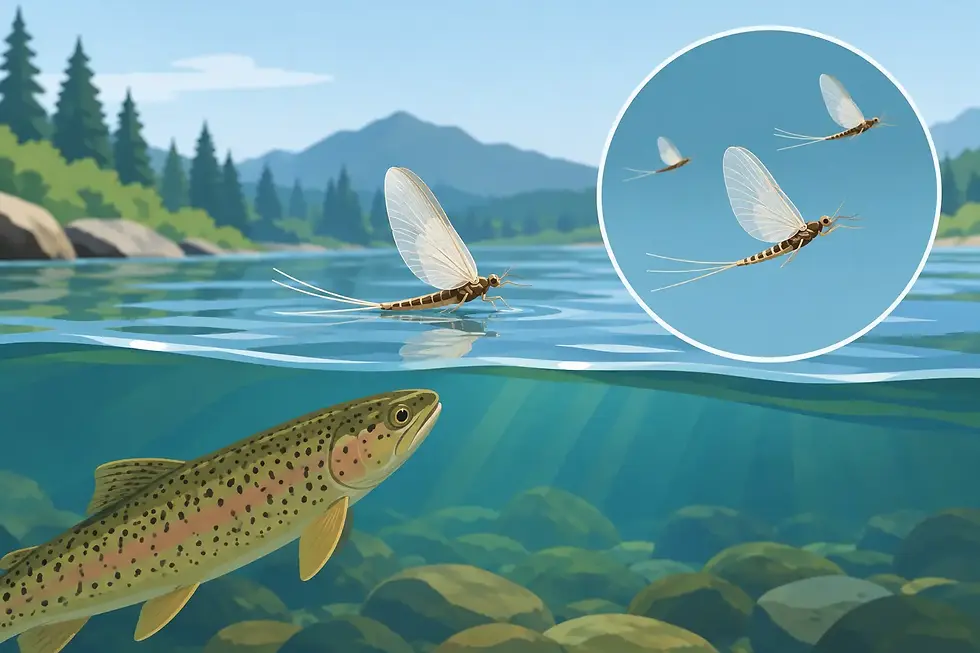
Once the insect breaks free of its nymphal skin, it becomes a dun. This is the upright-winged mayfly most anglers picture during a hatch. Duns float on the surface while their wings dry, making them visible targets for trout.
A dry fly is the right tool when you see steady, confident rises and can spot adults drifting downstream. Look closely before choosing a pattern. Are the naturals pale yellow, creamy, olive, gray, or tan? Are they a size 10 or a size 18? Size is usually more important than achieving an exact shade, especially in broken water.
For general mayfly hatches, Parachute Adams patterns are hard to beat because their gray profile suggests many species. Comparaduns, extended-body duns, and traditional Catskill-style dries can be better when fish are focused on a specific silhouette. A lower-floating pattern often excels in smooth water, while a more visible parachute fly is easier to track in choppy current.
Do not automatically fish the largest dry fly you can see. Large adults may be present, but trout can be keyed on smaller insects mixed into the hatch. If good rises continue but your fly is refused, first check for drag. Then try a smaller pattern or shift from a high-floating dry to a more subtle emerger.
Reading rises during a dun hatch
The shape of a rise offers useful information. A clear nose and sip usually means trout are taking insects at or near the surface. A rolling rise, a boil, or a swirl without a visible snout often points to emergers just below the film. Neither clue is absolute, but it gives you a smart starting point instead of changing flies blindly.
Spinners: The Late-Session Opportunity
After mating, adult mayflies become spinners. Their bodies often look more slender, their wings are clear or translucent, and they eventually fall spent on the water with wings flat. This spinner fall can produce some of the best dry-fly fishing of the season, particularly during calm evenings.
Trout feeding on spinners may hold in slow current, tailouts, and slick edges where dead adults collect. Because spinners lie flat, a standard upright-wing dry can look wrong even when its color is close. A spent-wing spinner pattern, fished completely drag-free, is the better match.
Timing is the challenge. Spinner falls are often brief and can depend on air temperature, wind, humidity, and the local species. Stay observant near dusk, especially after you have seen a morning or afternoon mayfly hatch. If the surface suddenly fills with tiny spent insects and trout begin feeding quietly, switch quickly and fish the calmer seams.
Build a Practical Mayfly Selection
You do not need a separate fly for every mayfly in the river. A compact, well-chosen selection will handle most trout situations and costs less than filling a box with overly specialized patterns. Keep nymphs in a few sizes, including slim dark, olive, and brown options. Add versatile emergers, visible general-purpose dries, and a few spinner patterns for evening fishing.
For many waters, sizes 14 through 20 cover the core of mayfly fishing, though larger spring hatches and tiny tailwater insects may push beyond that range. Carry multiples of the flies you trust. Losing a productive size 18 emerger to a branch during a good hatch is frustrating when you have no replacement.
Discount Quality Flies focuses on proven trout fly patterns because dependable basics are what anglers reach for most often. The goal is not to buy more flies than you need. It is to carry quality patterns in enough sizes and stages that you can respond when trout change their focus.
Match the Stage Before You Match the Name
Knowing whether you are seeing a Blue-Winged Olive, a Pale Morning Dun, or a Hendrickson can help, particularly on selective water. But stage recognition is the more useful skill when the fish are feeding now. Ask three questions: Is the insect underwater, trapped in the film, standing upright on the surface, or lying flat as a spent adult? What is its approximate size? Where are trout feeding?
Those answers narrow the choice fast. A small olive insect drifting just below the surface calls for an olive emerger before an oversized dry. A flat-winged insect in a quiet tailout calls for a spinner. No visible hatch and trout holding near the bottom calls for a nymph presented at depth.
Watch the water for a few minutes before you make the first cast. The mayfly stage trout are eating is often visible, and matching that stage with a clean, natural drift will catch more fish than constantly changing patterns.