Trout Flies for Tailwaters That Earn Their Spot

A tailwater can make a good angler feel underprepared fast. The water is usually clear, the trout see plenty of pressure, and a drift that looks almost right may get ignored all afternoon. The right trout flies for tailwaters help, but success usually comes from pairing proven patterns with the size, depth, and presentation the fish expect.
Tailwaters are fed by cold releases from dams, which creates stable temperatures and long growing seasons for aquatic insects. That dependable food supply grows healthy trout, but it also creates trout that eat tiny bugs every day and become selective when anglers show them the same oversized flies. You do not need a box filled with obscure patterns. You need a practical selection of durable flies that covers the food trout see most often.
Why Tailwater Trout Get So Selective
On a freestone stream, higher water and changing conditions can give an angler room to get away with a bigger, more visible fly. Tailwater trout often live in a different environment. Their water stays cold and clear, their feeding lanes remain consistent, and insects can hatch for months rather than days.
That consistency is the reason fish can become picky. A trout holding in the same run may inspect thousands of midges, mayflies, caddis larvae, and small crustaceans every week. It learns what belongs in the current. A fly that is too large, too bright, or drifting with a little drag can stand out for the wrong reason.
Still, selective does not always mean tiny. During runoff, generation releases, cloudy weather, or low-light periods, a larger nymph or streamer can be the better choice. Tailwater fishing rewards anglers who read the day rather than following a rigid rule about size.
The Core Trout Flies for Tailwaters
A dependable tailwater box starts with insects that are available nearly every day. Midges and mayflies deserve the most space, followed by caddis and a few attractor or searching patterns for changing conditions.
Midge Patterns for Everyday Fishing
Midges are a steady source of food on many tailwaters, especially through winter and early spring. They are small, common, and often the difference between a slow day and a productive one. Carry midge larvae and pupae in black, red, olive, cream, and natural shades, generally in sizes 18 through 24.
A Zebra Midge is one of the most useful starting patterns because its slim profile and small amount of flash imitate a range of midge larvae and pupae. A simple black or red version can fish well beneath an indicator, under a dry fly, or as the bottom fly in a two-nymph rig. When fish are feeding just below the surface, a small midge emerger with a visible wing case or trailing shuck is often more effective than a heavy nymph dragging near the bottom.
Do not overlook the value of color changes. If trout refuse a black midge, switch to red, olive, or cream before abandoning the midge approach altogether. On clear water, a subtle color adjustment can matter more than changing to an entirely different fly.
Mayfly Nymphs and Emergers
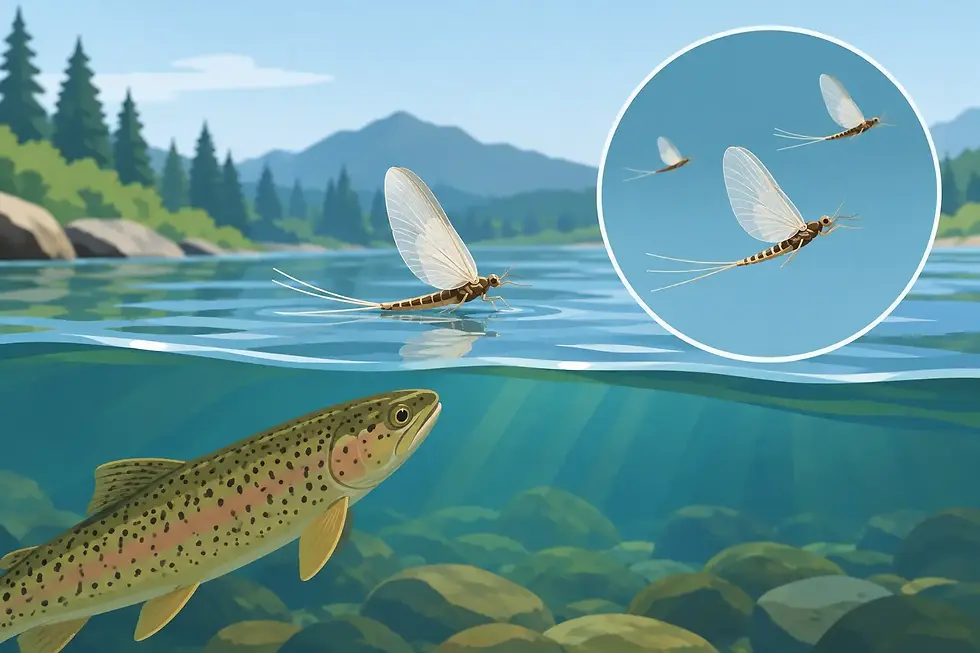
Mayflies are another tailwater staple. Blue-winged olives, pale morning duns, tricos, and other small mayflies can create consistent nymph and dry-fly opportunities. Pheasant Tail Nymphs, Flashback Pheasant Tails, Barr's Emergers, and slim-bodied mayfly nymphs are reliable patterns because they suggest the shape and movement of many species without being overly specific.
For subsurface fishing, carry these patterns mostly in sizes 16 through 22. A size 18 Pheasant Tail can be a strong lead fly when fish are taking medium-sized mayfly nymphs, while a size 20 or 22 emerger works well as a trailer when trout are focused on smaller bugs.
Emergers are especially important when you see rises but cannot get fish to take a dry. Trout may be sipping insects trapped in or just under the film rather than taking fully developed adults. In that situation, a lightly dressed emerger fished on a long, fine leader can outperform a high-floating dry fly.
Dry Flies for Precise Surface Feeding
Tailwater dry-fly fishing can be technical, but it does not have to be complicated. The key is matching the stage of the insect trout are eating. A Parachute Adams remains a useful general mayfly pattern because it is easy to see and covers a wide range of hatch situations. Small Griffith's Gnats are dependable when trout are sipping midge clusters, while CDC-style midges and mayfly emergers work when fish are taking individual insects in the surface film.
For trico or small mayfly hatches, sizes 20 through 24 are common. That can test your eyes and knot-tying patience, but downsizing is often necessary on calm, clear water. Use the smallest fly you can see and present accurately. If a size 22 is the right match but impossible for you to track, use a small, visible dry fly as an indicator and trail the tiny pattern behind it.
Caddis, Scuds, and Sowbugs
Not every tailwater is a midge-and-mayfly factory. Many productive waters support caddis, scuds, sowbugs, and aquatic worms. These food sources are particularly valuable because they can be available between major hatches.
A tan or olive caddis larva, a soft hackle caddis pupa, and a few Elk Hair Caddis patterns provide useful coverage where caddis are present. Scuds in olive, gray, and orange are worth carrying on spring-creek-like tailwaters with weed beds and strong aquatic vegetation. Sowbugs, usually in gray or tan, can be excellent where those small crustaceans are abundant.
These patterns are not glamorous, but they catch trout that are feeding steadily below the surface. If you are seeing no obvious hatch and standard nymphs are not producing, a scud or sowbug is a smart change.
Size, Tippet, and Weight Matter as Much as Pattern
Tailwater anglers often lose fish before the fly reaches the trout. Heavy tippet, a bulky knot, or too much split shot can make a good fly look unnatural. In clear water, 5X is a reasonable everyday starting point, while 6X and 7X may be necessary for tiny dry flies and pressured fish. The trade-off is obvious: finer tippet improves presentation but reduces abrasion resistance and makes landing larger trout more demanding.
Match your weight to the depth and current. Nymphs should reach the feeding zone, usually near the bottom, but they should not plow through the run like an anchor. Tungsten beadheads are useful in deeper seams and faster flows. In shallow flats or slow water, a lighter fly or minimal split shot often gives a more natural drift.
For a two-fly nymph rig, use a slightly larger or heavier pattern on top and a smaller midge, emerger, or mayfly nymph below. This setup covers more depth and gives trout two familiar food items. Keep the rig practical. If tangles become constant, shorten the dropper or simplify to one fly until you regain control.
Presentation Is the Real Test
The best tailwater fly cannot overcome a poor drift. Before changing patterns repeatedly, check your position and line management. Get close enough to reduce drag, make upstream or up-and-across casts when possible, and keep as much fly line off the water as conditions allow.
Watch your indicator closely, but do not rely on it alone. A pause, sideways slide, or slight hesitation can be a take. With dry flies, watch the water around the fly as much as the fly itself. A selective trout may take softly enough that the only signal is a small dimple or the disappearance of a tiny wing.
If fish are refusing your offering, make one deliberate adjustment at a time. First improve the drift. Then change depth. Next, try a smaller size or a more natural color. This approach helps you learn what the trout want instead of turning your fly box into a guessing game.
Build a Tailwater Box That Gets Fished
A practical selection does not need to be expensive or oversized. Stock multiple sizes of your confidence patterns, because losing a size 20 midge to a branch should not end your best program for the day. Focus on proven trout fly patterns in midge, mayfly, caddis, scud, and sowbug categories, with a few dependable dries and streamers for variety.
Quality matters here. Small flies must have clean proportions, durable thread wraps, sharp hooks, and beadheads that hold up after repeated fish. Discount Quality Flies makes it easier to carry enough of the sizes and colors that tailwater fishing demands without treating every lost fly like a major expense.
The next time a clear tailwater seems intimidating, start simple: observe the bugs, fish a natural pattern at the right depth, and give it a clean drift. Trout may be selective, but they are still trout, and a well-presented fly that looks like food will earn its turn.