Build a Trout Fly Assortment That Covers Water

A fly box full of random favorites can look impressive and still leave you unprepared when trout are feeding on tiny mayflies, caddis skittering along a bank, or nymphs drifting deep through a fast run. A useful trout fly assortment is not about owning every pattern ever tied. It is about carrying proven flies in practical sizes so you can cover the conditions you actually fish.
For most anglers, the best approach is simple: build around the insects trout see most often, then add a few high-confidence attractors and streamers. That gives beginners a dependable starting point and gives experienced anglers enough depth to adjust when the water gets technical.
What a Trout Fly Assortment Should Cover
A well-rounded assortment should handle three feeding zones: the surface, the water column, and the bottom. Trout do not always feed in the same place, even on the same river. A fish rising in a slick tailout needs a different presentation than one holding tight to the bottom of a cold, fast riffle.
Dry flies cover visible surface feeding. Emergers sit just below or in the surface film, where many trout feed during a hatch. Nymphs represent the immature insects that make up a major part of a trout's daily diet. Streamers suggest minnows, leeches, crayfish, and other larger meals.
You do not need equal numbers of each category. On many freestone rivers and tailwaters, nymphs deserve the most space in the box because they produce throughout the day, including when no hatch is apparent. Dry flies earn their place because surface takes are exciting and because trout can become very selective during a hatch. Streamers may take up the least room, but they can be the right answer in high water, low light, or when targeting larger fish.
Start With Proven Mayfly Patterns
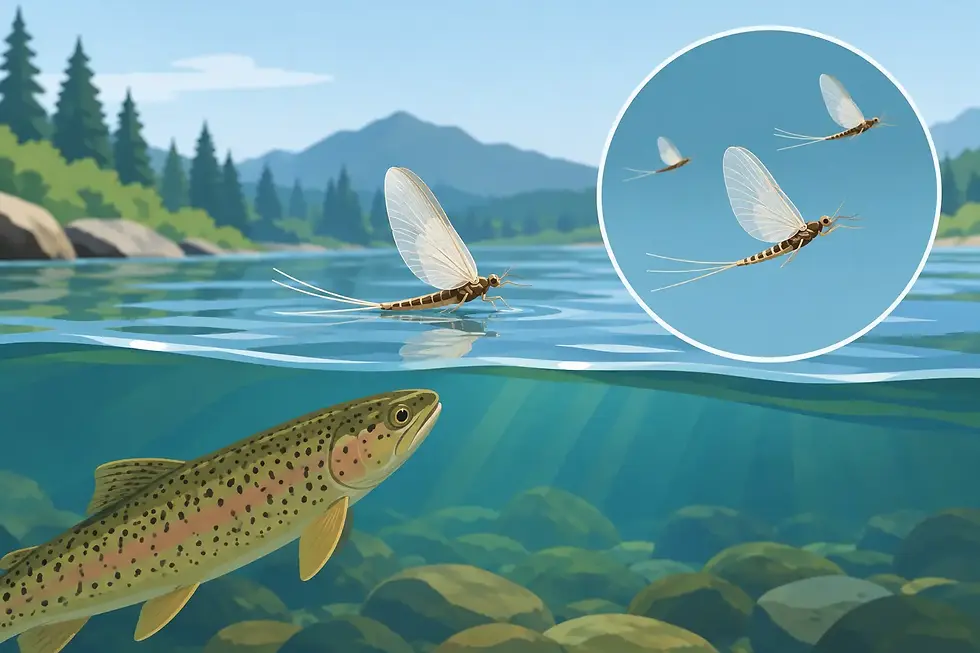
Mayflies are a foundation of trout fishing across the United States. A practical selection should include both general mayfly imitations and a few patterns that handle specific stages of the hatch.
For dry flies, Parachute Adams patterns are hard to beat as general mayfly imitations. Carry them in sizes 12 through 18, with size 14 and 16 doing much of the work on average trout water. A light-colored mayfly dry, such as a Pale Morning Dun style pattern, is useful on western rivers and tailwaters where pale mayflies hatch regularly. Smaller blue-winged olive patterns in sizes 16 through 20 are especially valuable on cloudy days, cool weather, and fall or spring afternoons.
Below the surface, Pheasant Tail Nymphs and Hare's Ear Nymphs are reliable choices because they suggest many types of mayfly nymphs without demanding an exact match. Stock a range from size 12 to 18. Add slim, dark nymphs in sizes 18 to 22 if you fish clear tailwaters or heavily pressured streams. On water where trout inspect every drift, size and profile often matter more than a complicated pattern name.
Emergers deserve attention when trout are making subtle rings rather than fully breaking the surface. A Sparkle Dun, a CDC-style emerger, or a simple trailing-shuck pattern can make the difference when standard dry flies get ignored. Keep a few in the same general sizes as your mayfly dries.
Add Caddis Flies for Moving Water
Caddis are common on rivers and streams, and trout often feed on them with more aggression than they show toward mayflies. Adult caddis move, skate, and flutter. Their larvae also drift often enough to make excellent nymph choices.
For the surface, Elk Hair Caddis patterns in tan, olive, and dark body colors cover a lot of ground. Sizes 14 to 18 are the core range. These are durable flies that float well, making them practical for pocket water and broken current where a delicate dry can disappear.
For subsurface fishing, carry caddis larva and pupa patterns in olive, tan, and cream. A weighted green caddis larva can be a productive lead fly under an indicator, while a smaller caddis pupa works well as a dropper. If trout are feeding just below the surface during an evening hatch, fish a pupa pattern on a short dropper behind a visible dry fly.
The Core Trout Fly Assortment by Category
When building a box from scratch, it helps to think in families rather than chase every color variation. The following categories provide broad coverage without wasting space on duplicates that fish the same way:
Dry flies: Parachute Adams, Elk Hair Caddis, small blue-winged olive patterns, and larger attractors such as Chubby Chernobyls or Stimulators.
Nymphs: Pheasant Tails, Hare's Ears, Prince Nymphs, stonefly nymphs, caddis larvae, and slim beadhead nymphs.
Emergers: Mayfly emergers, caddis pupae, and soft hackle patterns that move naturally in the current.
Terrestrials: Hoppers, ants, and beetles for summer banks, grassy meadows, and windy afternoons.
Streamers: Woolly Buggers, Sculpin-style patterns, and a few smaller baitfish imitations in olive, black, white, or natural tones.
The goal is not to fill every slot with a different fly. Buy multiple of the patterns that reliably get chewed up, lost in rocks, or snapped off in trees. A trout does not care whether a fly is rare. It cares whether the drift, depth, profile, and behavior look like food.
Choose Sizes Before Chasing Colors
Anglers often buy too many colors and not enough sizes. On most trout water, size is one of the first details fish notice. A size 12 nymph and a size 18 nymph may both be called a Pheasant Tail, but they are not interchangeable when trout are keyed on small insects.
A practical starting range is sizes 12 to 18 for most dry flies and nymphs. Add sizes 20 and 22 for small mayflies, midges, and technical tailwater fishing. Larger flies in sizes 6 to 10 are useful for stoneflies, hoppers, big attractors, and streamers.
Color still matters, particularly in clear water. Keep the basics covered: olive, brown, black, tan, gray, cream, and a few brighter attractor colors. But resist the urge to treat color as the first adjustment. If fish refuse your fly, first check your depth, drift, tippet, and fly size. A perfect olive shade will not help if the fly rides two feet above feeding trout.
Build for Your Home Water First
A mountain freestone stream, a spring creek, and a western tailwater can all hold trout, but they ask different questions of your fly box. Freestone rivers often reward durable attractors, stonefly nymphs, caddis patterns, and bigger dries that remain visible in choppy current. Spring creeks and tailwaters commonly demand smaller flies, finer tippet, and closer attention to specific hatches.
If you regularly fish the Provo River, for example, small midges, blue-winged olive patterns, caddis, sowbugs, and scuds can be smart additions depending on the section and season. If your local water has heavy summer grasshopper activity, more hopper patterns may be a better investment than a dozen extra midge colors.
Before ordering flies, consider the water you fish most, the seasons you fish, and whether you usually see fish feeding on top. Then build outward. A focused box for your nearby river will catch more trout than a scattered assortment built for places you may visit once.
Do Not Forget Midges and Stoneflies
Midges are small, but they matter all year on many trout rivers, especially tailwaters. A few tiny midge larvae, pupae, and adult clusters in black, olive, cream, and red belong in any serious trout box. Sizes 18 to 22 may look too small at first, yet they often produce when larger nymphs fail.
Stoneflies are the opposite end of the size range. Golden stone, salmonfly, and little black stonefly patterns can be essential in appropriate waters. Carry larger stonefly nymphs in sizes 6 to 12 and smaller dark stonefly patterns in sizes 12 to 16. Even when no adults are visible, stonefly nymphs can be productive near rocky bottoms.
Carry Flies You Are Willing to Fish
A good fly assortment should be affordable enough that you can fish it confidently. Trout water eats flies. They snag on submerged branches, wedge between rocks, and disappear when a strong fish turns downstream. Holding back your best pattern because it cost too much is not a useful strategy.
Choose quality flies with durable hooks, secure thread wraps, and materials that hold their shape, then keep enough duplicates to fish the right pattern without hesitation. Two or three copies of your most productive sizes is a practical minimum. Carry more of small nymphs and heavily used dries, since those tend to disappear first.
Organize the box so you can find patterns quickly. Keep dries separated from nymphs, group flies by size when possible, and replace depleted sections after each trip. That small habit prevents the frustrating moment when trout are rising to size 18 caddis and your box only has one battered size 14 left.
The best assortment changes with your water, but the principle stays the same: carry proven patterns in usable sizes, fish them with confidence, and let the trout tell you what to add next.