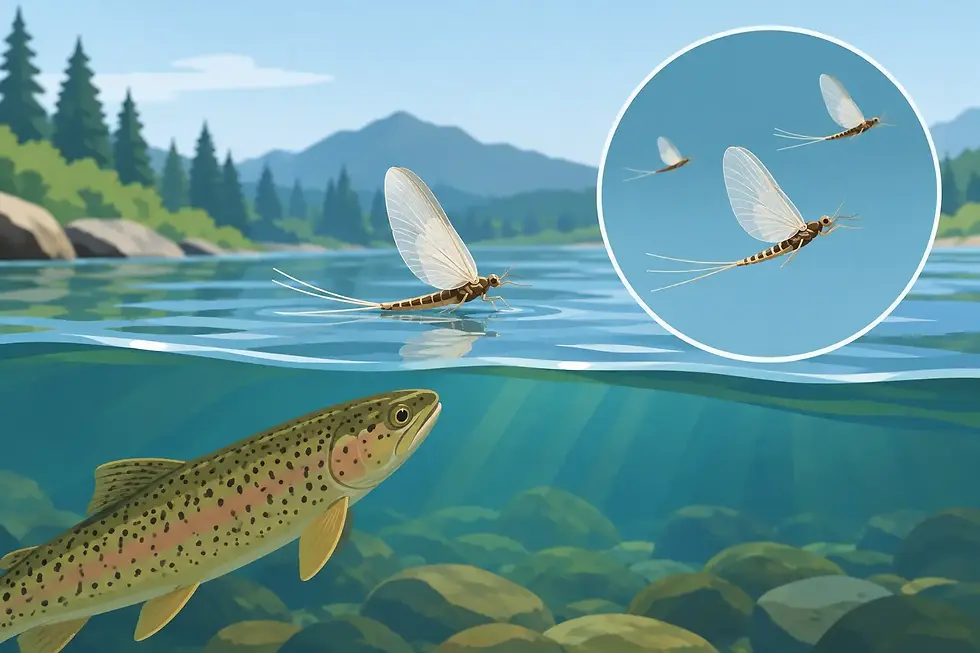
Can Trout See Tippet? What Really Matters

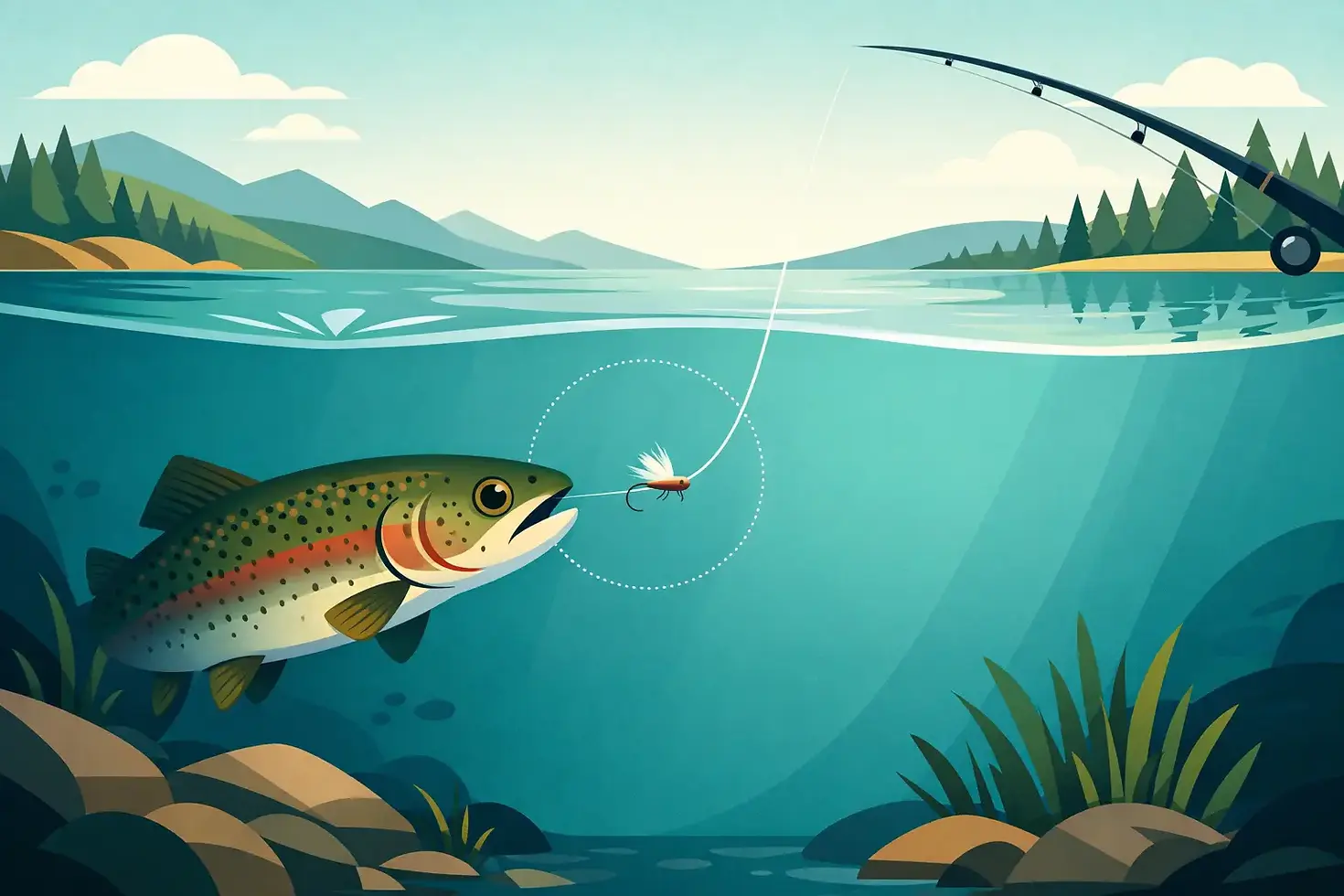
A trout rises twice in the same feeding lane, ignores your dry fly twice, and suddenly every inch of your leader feels suspicious. Can trout see tippet? Yes, under the right conditions they can. But visible tippet is rarely the whole reason a fish refuses. Drag, a poor drift, an oversized fly, an unnatural presentation, or a knot that clumps the setup can matter just as much.
The practical answer is that trout do not inspect tippet in a vacuum. They see the complete package moving through their window: fly, leader, line shadow, knots, glare, and how naturally the offering drifts. Choosing the right tippet improves your odds, especially on clear, pressured water, but it should support good presentation rather than replace it.
Can Trout See Tippet in Clear Water?
Trout have excellent vision, particularly when they are feeding near the surface. In clear, shallow water, a fish can spot leader material, especially if the tippet is heavy, catches light, or lands in an awkward position around the fly. Wild trout that see regular angling pressure are often more cautious because they have learned that certain unnatural shapes and movements lead to danger.
Water clarity is the biggest factor. A spring creek, tailwater, or low summer freestone can make 4X or 5X tippet appear far more obvious than it would in stained runoff or a choppy riffle. Bright sun can add flash to the equation, while a smooth pool gives trout more time to study a drifting insect imitation.
That does not mean every clear-water situation demands the finest tippet you own. If you are fishing a size 10 hopper tight to a grassy bank, 5X is usually not the sensible choice. The fly itself is large, the take may be aggressive, and a heavier tippet gives you better control when a good fish runs for cover. Match tippet diameter to the fly, the water, and the fish you expect to hook.
Why moving tippet is more noticeable
A straight, motionless tippet can be difficult for a trout to pick out, particularly beneath broken surface water. Tippet becomes more noticeable when it drags, swings, or forms a visible wake. This is one reason anglers sometimes blame diameter when the real problem is a bad drift.
On dry flies, a stiff or poorly positioned tippet can pull the fly across the current. On nymphs, an overly tight connection can make the rig swing too quickly at the end of a drift. Trout may not be refusing because they clearly see 5X instead of 6X. They may be refusing because the food item does not move like food.
Tippet Diameter Matters More Than Pound Test
Tippet is usually labeled by X size, but the actual diameter is what trout see. As the X number gets larger, the tippet gets thinner. Common trout sizes run from 3X and 4X for larger flies and stronger conditions to 6X and 7X for small dries, midges, and highly selective fish.
Pound-test ratings can vary between manufacturers, so two spools with the same stated strength may not have identical diameters. When trout are especially wary, compare the diameter printed on the spool rather than assuming all 5X or 6X materials behave alike.
A useful starting point is to divide the fly size by four to estimate an appropriate tippet size. A size 16 fly often pairs well with 4X, a size 18 with 5X, and a size 20 with 5X or 6X. It is a guideline, not a rule. A bushy size 16 Elk Hair Caddis may fish well on 4X, while a sparse size 16 mayfly dry on flat water can benefit from 5X.
The right diameter also has to be strong enough for the job. Fine tippet gives smaller flies more natural movement and can reduce refusals, but it sacrifices abrasion resistance and puts more pressure on your knots, hook set, and fish-fighting technique. Fishing 6X around sharp rocks, woody banks, or large browns may create more lost fish than extra takes.
When You Should Drop Down a Tippet Size
There are times when going finer is a smart, practical adjustment. Consider dropping one size when you are seeing consistent refusals in clear, slow water and your fly matches the hatch well. It can also help during a technical mayfly hatch, when fishing tiny midges or emergers, or when a trout repeatedly follows a fly without eating.
Before changing tippet, check your presentation. Watch whether the fly is dragging. Look for leader or fly line shadow passing over the fish. Make sure your knot is clean and that no coil of tippet is sitting around the fly. A small loop knot can sometimes improve the action of nymphs and streamers, while a carefully seated clinch-style knot keeps dry-fly connections compact.
If the drift is clean and the fish still refuses, move from 4X to 5X or from 5X to 6X. Make that change with a purpose. Going all the way to 7X just because the water is clear can turn a manageable fish into a long, frustrating fight and may not solve the real issue.
When Heavier Tippet Is the Better Choice
Trout do not always have the time, visibility, or motivation to study your setup. Broken water, wind chop, colored flows, low light, and fast feeding can all make tippet less relevant. In these conditions, stronger material often lets you fish more effectively.
Heavier tippet is usually the better call when:
You are casting larger foam terrestrials, stoneflies, or streamers.
You are fishing fast pocket water where line control matters.
You expect larger trout near logs, undercut banks, or heavy rocks.
You are using a two-fly rig that needs enough strength to turn over cleanly.
A stout leader section can also reduce tangles and improve turnover. That matters when you need to place a fly accurately under a branch, reach a feeding seam from across the current, or control a nymph rig through several conflicting currents. A setup that casts well and drifts naturally often catches more fish than an ultra-fine setup that collapses, tangles, or breaks on the first solid trout.
Fluorocarbon versus nylon tippet
Fluorocarbon is often chosen for nymphing because it sinks faster, resists abrasion, and has a refractive index closer to water than nylon. Those qualities can help, especially in clear water with subsurface flies. It is not invisible, though, and it does not excuse poor drift control.
Nylon tippet is a strong choice for dry flies because it floats more readily and is generally easier to manage. It also tends to have more stretch, which can protect fine tippet on a sudden strike. Either material can catch plenty of trout. Choose based on whether you need flotation, sink rate, abrasion resistance, and manageable knots, not on the promise of invisibility alone.
Presentation Usually Beats an Invisible Setup
A trout looking up through the surface has a limited viewing window, but it notices contrast and movement well. A heavy fly line splashing into that window, a leader flashing across it, or a dry fly skating against the current can put fish down faster than a slightly heavy tippet.
Start by giving the fish the cleanest possible first drift. Approach carefully, stay low when fishing shallow water, and make casts that keep the fly line away from the trout's likely view. Use enough leader length to separate the fly from the line, then add or remove tippet based on your fly size and the water's demands.
For a typical trout stream, a 9-foot leader tapered to 4X or 5X is a dependable starting point. Add a couple of feet of 5X or 6X for small dry flies and clear tailwater conditions. For a hopper-dropper or larger nymph rig, 4X or 5X may be the more durable, effective choice. Carrying a few proven tippet sizes is more useful than trying to make one spool cover every hatch and every river.
Fine tippet earns its place when trout are selective, the water is clear, and the fly is small. Otherwise, fish the heaviest tippet that still lets your fly drift naturally and gets consistent takes. That choice protects your flies, shortens fights, and leaves you ready when the next good trout rises in the seam.